

Earlier this month, BeyondTrust hosted its Partner Summit London 2026 bringing together partners from across the channel to examine the trends reshaping identity security and explore how organisations can adapt to an increasingly complex digital landscape.
A clear theme emerged throughout the event: identity has become the foundation of modern cybersecurity. As AI adoption accelerates and non-human identities proliferate, organisations must rethink how they establish visibility, manage privilege and maintain trust across increasingly interconnected environments.
Identity has changed.
Identity is no longer about just human identities, it’s about machine identities, service accounts and AI agents. Identity is becoming a much broader attack surface, with 100 machine identities and AI agents now existing for every human identity. During the summit, BeyondTrust CEO Janine Seebeck highlighted that “only 19% of organisations have implemented security controls for AI agents.” This statistic demonstrates that the vast majority of organisations remain exposed to risks posed by unmanaged and unaccounted-for non-human identities.
It’s no longer about who is privileged, it’s about who could become privileged
Attackers don’t care where an attack starts. They only care about the path to privilege.
Reading a list of privileged accounts only tells you where that privilege currently exists. Organisations should be looking ahead to where privilege can be reached from.
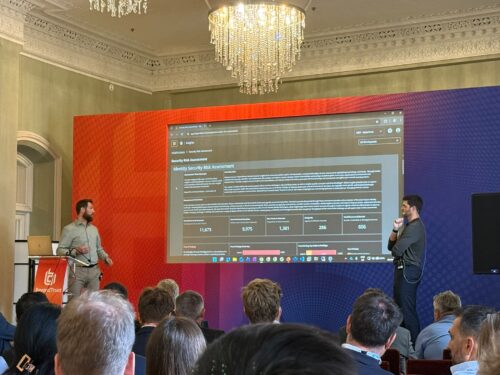
At the summit, one example demonstrated how 200 contact-centre employees could potentially reach Domain Admin through misconfigured trust paths. It wasn’t simply about employees who were privileged, as they weren’t. It was about a chain of relationships that could potentially create a path to privilege.
You can’t protect what you can’t see
When it comes to protecting your organisation, you must have full oversight to understand everything that needs protecting.
The go-to-market framework to help protect identities is Visibility → Intelligence → Protection. Customers can enter this framework at different areas of the cycle and be brought into the wider platform over time.
The first step is understanding what identities exist, what access they have and where privilege sits. From there, organisations can identity what matters most, uncover hidden risk and understand potential paths to privilege.
This evidence-led approach was a key theme throughout the summit. Rather than starting with a product, organisations can start by understanding the risks that are already present in their environment.
The opportunity
As identity environments become more complex, organisations need the expertise to understand and act on identity risk.
This presents an opportunity for security partners to take a more advisory role, helping organisations assess their identity environments, hidden privilege and understand risks crated by AI agents and non-human identities.
Want to find out more about how identity security is changing? Discover BeyondTrust’s approach to identity security here.