

Last time in our AI security myth-busting series, we challenged the idea that MFA alone is enough to secure AI-powered environments. This Cybersecurity Awareness Month, under the theme “Don’t Make It Easy for Them,” we’re tackling another common assumption: that existing IAM (Identity and Access Management) controls already have AI covered.
For years, IAM has helped organisations manage access for employees and third parties. But the Unseen Workforce of AI agents introduces a growing number of non-human identities, from autonomous agents to automated workflows, that traditional identity programmes weren’t designed to govern.
The myth
At first glance, the claim that “our existing identity and access management (IAM) covers this” seems reasonable. Most organisations have already invested heavily in identity and access management. IAM helps control who can access systems, what permissions they have and how those permissions are governed. So surely AI falls under the same controls?
The reality is a bit more complex. Traditional IAM was built around employees, contractors and third-party users. Today’s AI-powered environments introduce a growing number of non-human identities, from AI assistants and autonomous agents to automated workflows and service accounts, that often operate with a different level of autonomy and access.
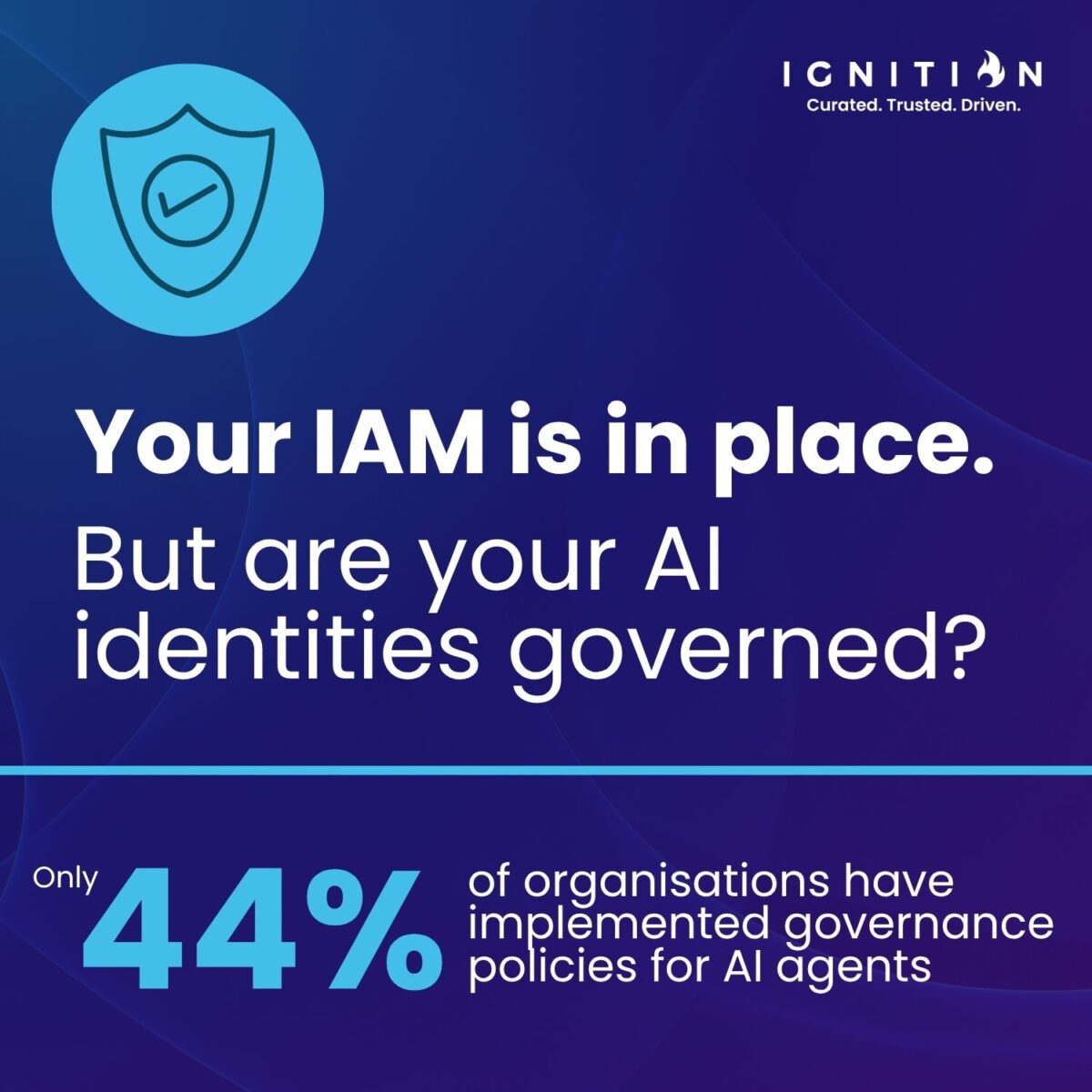
The challenge is that governance isn’t keeping pace with adoption. As highlighted in our Partner Toolkit and SailPoint’s AI Agents: The New Attack Surface, only 44% of organisations have implemented governance policies for AI agents, leaving many without clear oversight of the non-human identities operating across their environment.
As organisations deploy more AI-powered tools, many struggle to answer fundamental questions:
- How many non-human identities exist across the business?
- What systems and data can they access?
- What permissions have they been granted?
- Who is responsible for oversight and governance?
Without those answers, organisations can quickly lose visibility over the identities operating within their environment. And you can’t govern what you can’t see.
When access becomes risk
Cyber attackers increasingly target identities rather than infrastructure. In many cases, they’re no longer breaking in; they’re logging in using legitimate credentials and trusted accounts.
Now consider what happens when AI agents are added to the mix. According to McKinsey’s State of AI 2026 report, 89% of organisations now use AI. As organisations rapidly expand their population of non-human identities, visibility and governance become increasingly critical.
An AI tool granted excessive permissions, an unmanaged service account or an autonomous workflow connected to sensitive systems can unintentionally expand an organisation’s attack surface. If security teams lack visibility into these identities, they may not spot risks until it’s too late.
That’s exactly what Cybersecurity Awareness Month is warning against. Don’t make it easy for attackers by assuming existing controls automatically extend to every new AI-driven identity entering the business.
The reality
The myth is that existing IAM solutions automatically solve AI identity governance.
The reality is that AI introduces new identities, new access pathways and new governance challenges that many organisations are only beginning to understand.
Effective AI governance starts with understanding which non-human identities exist, what they can access and who is responsible for them. Only then can organisations apply the right controls, reduce unnecessary risk and confidently embrace AI innovation.
Because when it comes to securing the unseen workforce, visibility isn’t a nice-to-have. It’s the first step in ensuring you don’t make it easy for attackers.