

Organisations need to protect against email phishing attacks. But how can they do this?
Phishing and spoofing were the most commonly reported cybercrimes in 2025, according to Sendmarc’s 2026 Cyberthreat Report. As attackers become increasingly sophisticated, organisations need to understand how to protect themselves against email impersonation.
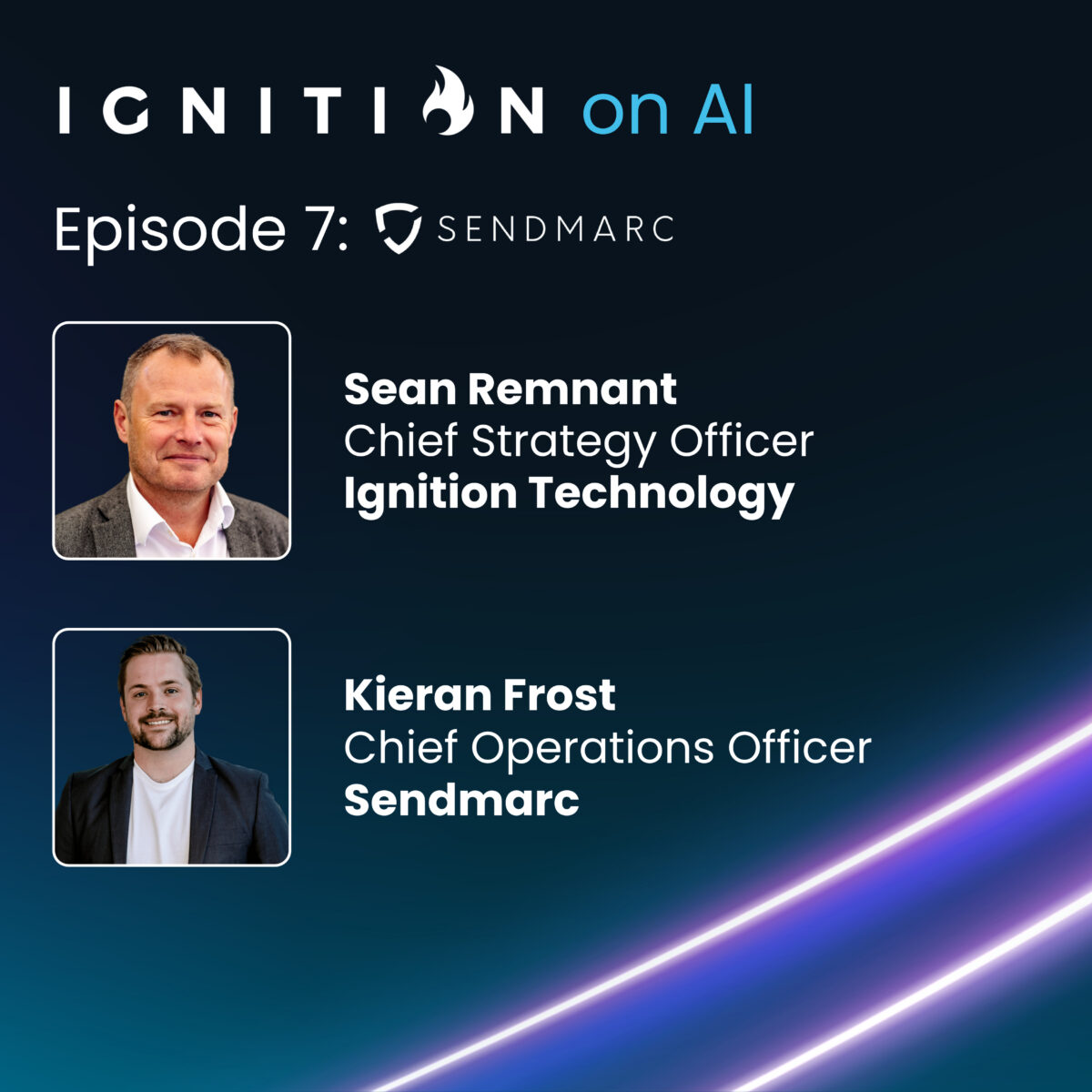
On the seventh episode of Ignition on AI, Ignition’s Chief Strategy Officer, Sean Remnant, is joined by Kieran Frost, Chief Operations Officer at Sendmarc, to discuss how AI is bringing new challenges to email security.
AI is making sophisticated phishing accessible at scale
The scale of the threat is growing, with Sendmarc reporting a 56% year-over-year increase in AI-driven attacks, showing just how quickly the threat landscape is evolving. As Kieran explains in the episode, organisations are at greater risk of phishing attacks. Before, less sophisticated attackers relied on mass emails, often riddled with grammatical errors and a lack of context. Now, more advanced attackers are on the rise, using generative AI to support them as they spend weeks researching individuals and their roles to build highly targeted campaigns.
While it hasn’t changed the method of the attack, it’s allowing adversaries to operate at machine speed, making it difficult for humans to keep up.
Email impersonation is a significant vulnerability
The episode discusses why email authentication, such as DMARC, is critical to protecting organisations from misuse of their domain. DMARC is used to authenticate legitimate senders and instruct receiving mail servers to reject unauthorised emails.
Kieran uses the example of invoice fraud to explain why DMARC is so important. If an attacker impersonates a supplier and sends an email claiming their bank details have changed, this raises alarm bells, causing a business risk.
Without DMARC or email authentication, organisations are leaving themselves vulnerable to domain spoofing and impersonation attacks.
Why are organisations failing to implement DMARC?
Around 40% of organisations in the UK have no DMARC record at all based on Sendmarc’s analysis of the top 1,000 companies in the market.
The three barriers for implementation include:
- A lack of awareness: Many organisations don’t realise this is something they need.
- Misplaced confidence: Some assume their existing email provider already manages DMARC protection, keeping them secure.
- Implementation complexity: DMARC requires coordination across multiple departments and platforms such as marketing, payroll and CRM.
Visibility is the starting point for stronger email security
Before organisations can start to introduce effective controls, they need to understand exactly what systems are being used.
DMARC can help organisations identify all the different platforms sending emails using their domain to provide security teams with a clearer picture.
Top three steps for security leaders
In the episode, Kieran provides his top three recommendations for security leaders to take:
1. Understand your current exposure
Check whether your organisation has a DMARC record already and assess your current level or security.
2. Move towards proactive email security
Security teams must implement a robust approach to blocking malicious emails and anomalous behaviour.
3. Build partnerships and use managed services
Security teams are feeling increased pressure due to strains created by AI. Organisations need to recognise where external expertise can provide support.
Security teams cannot keep pace with the volume of AI-enabled threats without the right processes and support in place.
Watch the full episode of Ignition on AI, where Kieran and Sean discuss how organisations can improve their email security.
Subscribe to the Ignition Technology YouTube channel to catch future episodes of Ignition on AI.
Read Sendmarc’s 2026 Cyberthreat Report to explore the growing risks of email impersonation and why DMARC adoption should be a priority for organisations.