

Organisations are adopting AI faster than they can secure it. So how can they fix the risk that lies ahead?
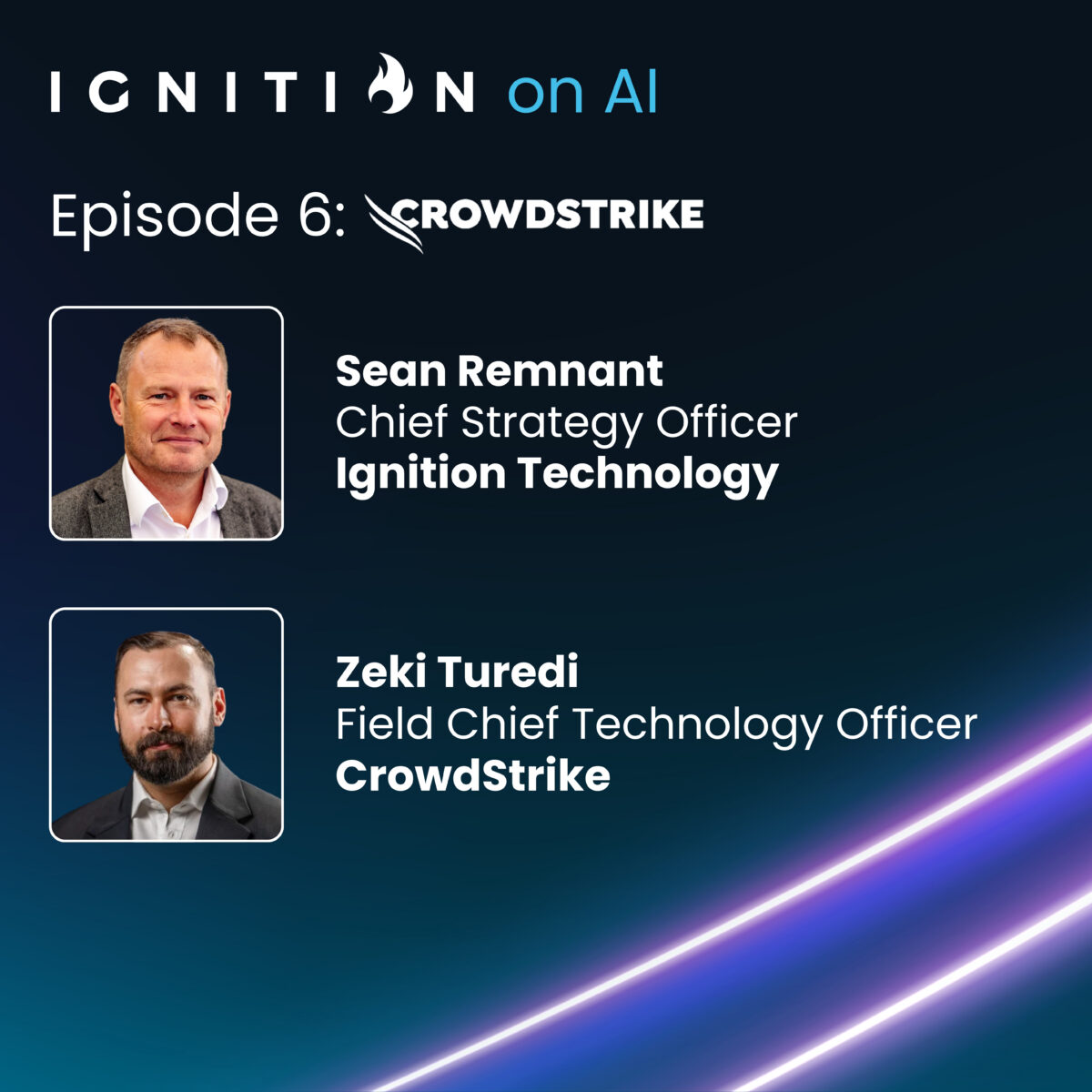
On the sixth episode of Ignition on AI, Ignition Technology’s Chief Strategy Officer, Sean Remnant is joined by Zeki Turedi, Field Chief Technology Officer at CrowdStrike, to discuss the practical steps security leaders should take to secure their organisations.
AI is moving faster than security
Many businesses are racing ahead to adopt AI for productivity, without fully understanding the security risks.
While many organisations are aware AI can give them a competitive advantage, they’re still trying to figure out how to adopt it securely. Many employees are already using tools to help them do their job efficiently, but the reality is that many security teams lack visibility into what tools are being used, and what data they can access.
The threats aren’t limited to frontier AI
Frontier AI refers to the most advanced artificial intelligence tools out there, designed to push the boundaries of what AI can achieve. However, capabilities associated with frontier AI can also be replicated using smaller language and open models.
AI is helping to identify vulnerabilities in source code, applications and third-party technologies, taking the pressure off security teams. While this brings benefits, it also has drawbacks. AI is making sophisticated cyber operations more accessible, allowing less experienced individuals to carry out activities that once demanded advanced technical expertise.
You can’t secure what you can’t see
As AI tools and agents can interact with sensitive data, identities and cloud environments, it’s vital that the right policies and visibility is in place.
AI agents can easily operate across multiple domains, paving the way for more additional opportunities for the attackers to take. While this challenge isn’t isolated to AI, it compounds existing weaknesses in identity, cloud and SaaS security.
In the episode, Zeki compares this pattern with previous waves of technology adoption, where businesses moved quickly and attackers took advantage of gaps in security.
Where should CISOs start?
To tackle threats, security teams should start by establishing a baseline of AI usage and existing exposure.
1. Prepare for an increase in vulnerabilities
AI is making it easier to identify vulnerabilities in both internally developed applications and third-party technologies. Organisations must understand their exposure, prioritise remediation and reduce their attack surface.
2. Secure AI within the organisation
Security teams need visibility into how AI is being used, what information it can access and what permissions it has. This provides the right foundation for introducing appropriate policies, governance and security controls without restricting legitimate use.
3. Harness AI to strengthen security
AI isn’t just a tool for attackers. Security teams can explore how AI and automation can help them detect threats, manage increasing volumes of activity and respond more effectively.
Turning AI adoption into AI readiness
AI presents new opportunities for businesses, but adopting it requires more than introducing new technology and addressing the risks afterwards.
Organisations need to understand their exposure, establish appropriate tools and ensure security teams have the right visibility and capabilities to respond to threats.
Watch the latest episode of Ignition on AI, where Sean Remnant and Zeki Turedi uncover the challenges facing security leaders and the practical steps businesses can take to become AI-ready.
Subscribe to the Ignition Technology YouTube channel to catch future episodes of Ignition on AI.