

The workforce is changing. It is no longer made up of just people but an expanding population of AI agents, service accounts and other non-human identities. As organisations accelerate AI adoption, they must understand who or what is acting, what it can access and whether it can be controlled.
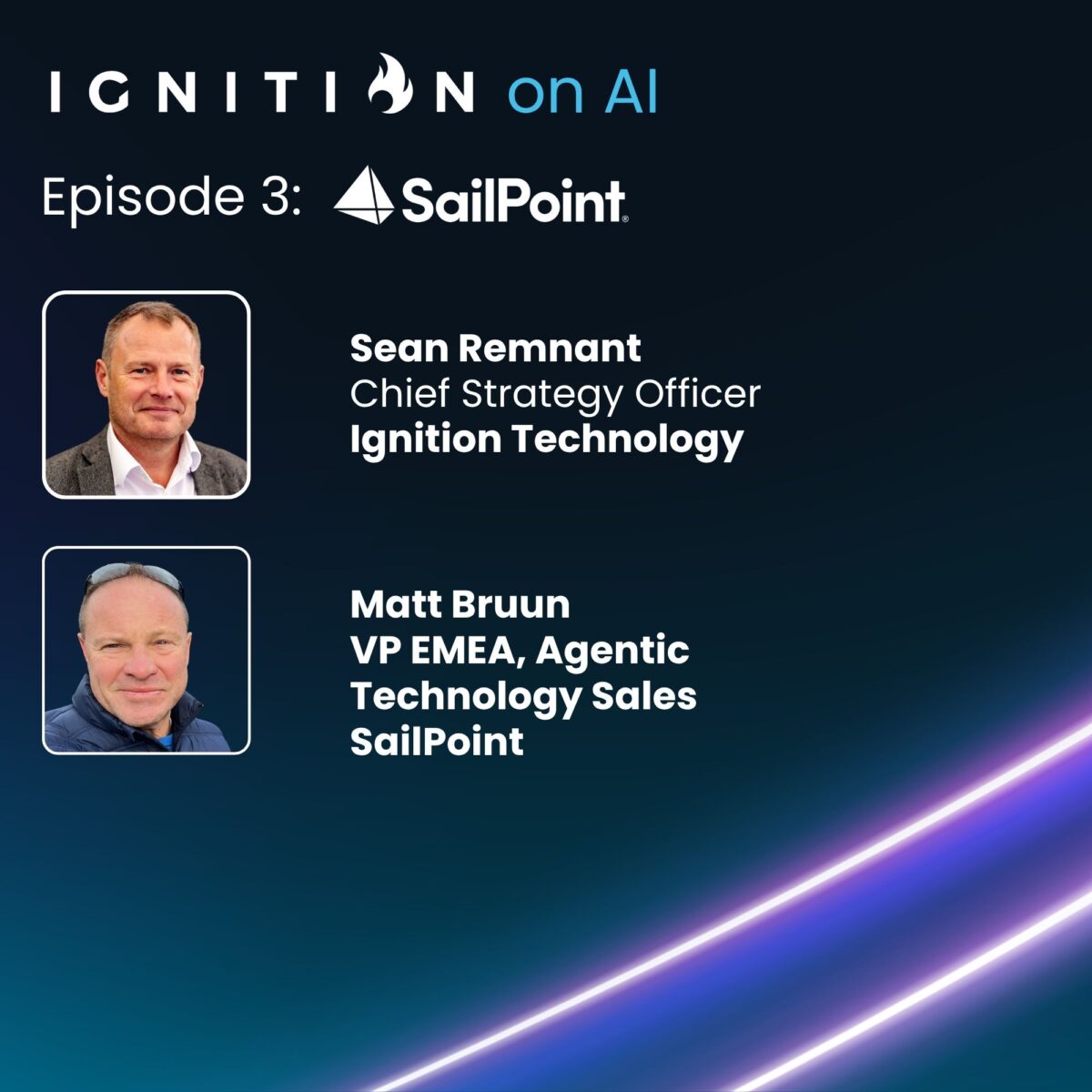
Our third episode in thr Ignition on AI video podcast series explores these challenges with Ignition Technology’s Chief Strategy Officer, Sean Remnant, joined by Matt Brunn, VP EMEA, at SailPoint to explore how AI is changing the scale and speed of identity.
AI is creating an unseen workforce
As organisations deploy more AI agents, they must maintain visibility and control over the growing number of non-human identities operating across their environments who have access to systems and data on behalf of the business.
This makes identity increasingly central to how organisations are governing AI usage.
Identity is becoming the control plane for AI
During the episode, Matt explains that “every non-human identity has to have an identity, and that identity needs to be tied back to a human identity.” This creates the control plane needed to understand what these identities are doing, who is responsible for them and what risks they introduce. Therefore, organisations can look out for repeated mistakes and repeat offenders, allowing corrections to be made and ensuring no orphaned agents.
Visibility comes before control
As the unseen workforce continues to grow, with the average enterprise nearing 50 to 100 agents per employee, so does the potential to overtake the size of a human workforce. While agents have the ability to produce work at pace by automation, improving productivity, they operate without a moral code. In the episode, Matt touches on how many agents use shared or unvaulted secrets, spilling sensitive credentials in plain text.
AI changes the speed of the security challenge
Organisations are struggling to achieve least standing privilege even when activity is happening at human speed. Now, with agents, this issue is becoming increasingly significant as machines act continuously and at scale.
Attackers now pose a higher risk than ever before, as they can easily compromise a human or agent’s identity, working at the same speed as the organisation’s own automated workflows and processes, accessing personal data. It’s crucial that organisations have oversight of everything their agents can achieve, with the correct guardrails in place.
What should organisations do to maintain control?
The first step is understanding the current environment. Organisations must know what AI applications and platforms are being used, what agents exist, and what identities they have and what they’re doing. To do so, they can follow these three steps:
- Discover
Understand what AI, agents and non-human identities exist.
- Govern
Understand who owns them, what they can access, and if this is appropriate.
- Monitor
Always identify unusual behaviour and enforce controls.
The organisations that benefit most from AI won’t always be those that automate the most. They will be those that can automate at scale while maintaining visibility, governance and human oversight.
These are some of the themes in our latest episode of Ignition on AI. Watch the full episode to hear more about the rise of the unseen workforce, the changing identity landscape and what organisations can do to stay compliant and in control.
Subscribe to the Ignition Technology YouTube channel to catch future episodes of Ignition on AI.