

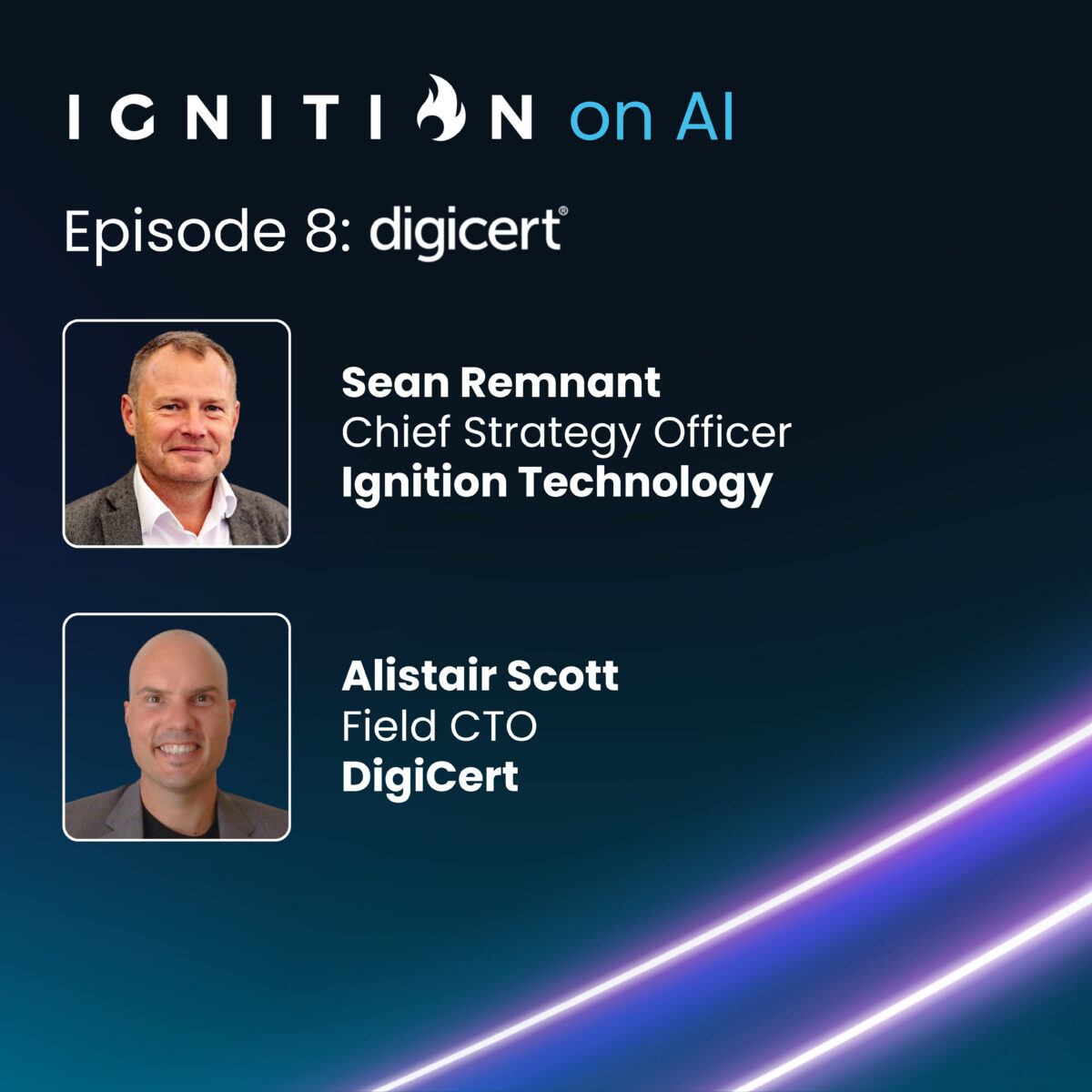
AI agents are becoming more embedded in business operations. But how can organisations ensure they know what is operating within their environments? And how can they trust it?
In our eighth episode of Ignition on AI, Ignition’s Chief Strategy Officer, Sean Remnant, is joined by Alistair Scott, Field CTO at DigiCert, to discuss how AI agents are changing cybersecurity, from machine identities and digital trust to shorter certificate lifecycles.
The growing unseen workforce
With machine identities on the rise, organisations are struggling to keep pace with rapid AI development and emerging threats, while remote working, hybrid environments and BYOD have complicated traditional network boundaries.
Now, AI agents are adding another layer of complexity, often operating without adequate visibility or oversight, adding to the growing unseen workforce that security teams must identify and manage.
Digital trust starts with visibility and discovery
As discussed in the episode, organisations need complete visibility of their assets, certificates, machine identities and AI workloads before they can establish effective security policies.
Shadow IT remains a significant challenge, with around 90% of organisations reporting issues. Without a thorough audit of inventory, security teams are operating in the dark, opening themselves up to threats.
DigiCert’s Trust Lifecycle Manager helps address this challenge through certificate discovery and management. The platform identifies public and private certificates, cryptographic keys and certificate usage. This provides organisations with a clearer picture of their environment.
Three emerging challenges shaping digital trust
Alistair highlights three key areas driving conversations around trust:
1. Shorter-lived certificates and automation
Certificate lifespans are reducing from 200 days to 47 days by 2029. As certificates will need to be renewed more frequently, automation will be essential to avoid expired certificates, service disruption and unnecessary risk.
2. AI trust and machine identities
Alistair explains there are three types of AI trust: content, agents and models. AI agents need to be discovered, assigned identities and governed through policies and permissions. It’s vital that organisations establish guardrails around the activities that agents can and cannot do, with the ability to block them from completing a task when necessary. Currently, 90% of AI agents are unmanaged by organisations.
3. Post-quantum readiness
Organisations transitioning to quantum-resistant cryptography will likely face challenges. Organisations need visibility of their existing cryptographic infrastructure to decide what needs to change. Early planning and investment will help organisations significantly.
Where should CISO’s start?
‘Be prepared for change and then be prepared to do it again.’
In this episode, Alistair recommends that CISOs start with discovery. This covers understanding what infrastructure, identities and certificates already exist so clear policies and guidance can be implemented.
With certificate lifecycles shortening and AI adoption only growing, organisations will need to adapt to changes. Organisations should start allocating budget and planning for post quantum readiness now.
Watch the full episode of Ignition on AI, where Alistair and Sean discuss how organisations can build trust and strengthen security.
Subscribe to the Ignition Technology YouTube channel to catch all episodes of Ignition on AI.