


What happens when your security team isn’t prepared for AI agents?
The Ignition on AI video podcast series continues to help our partners and their customers navigate the opportunities and challenges presented by AI.
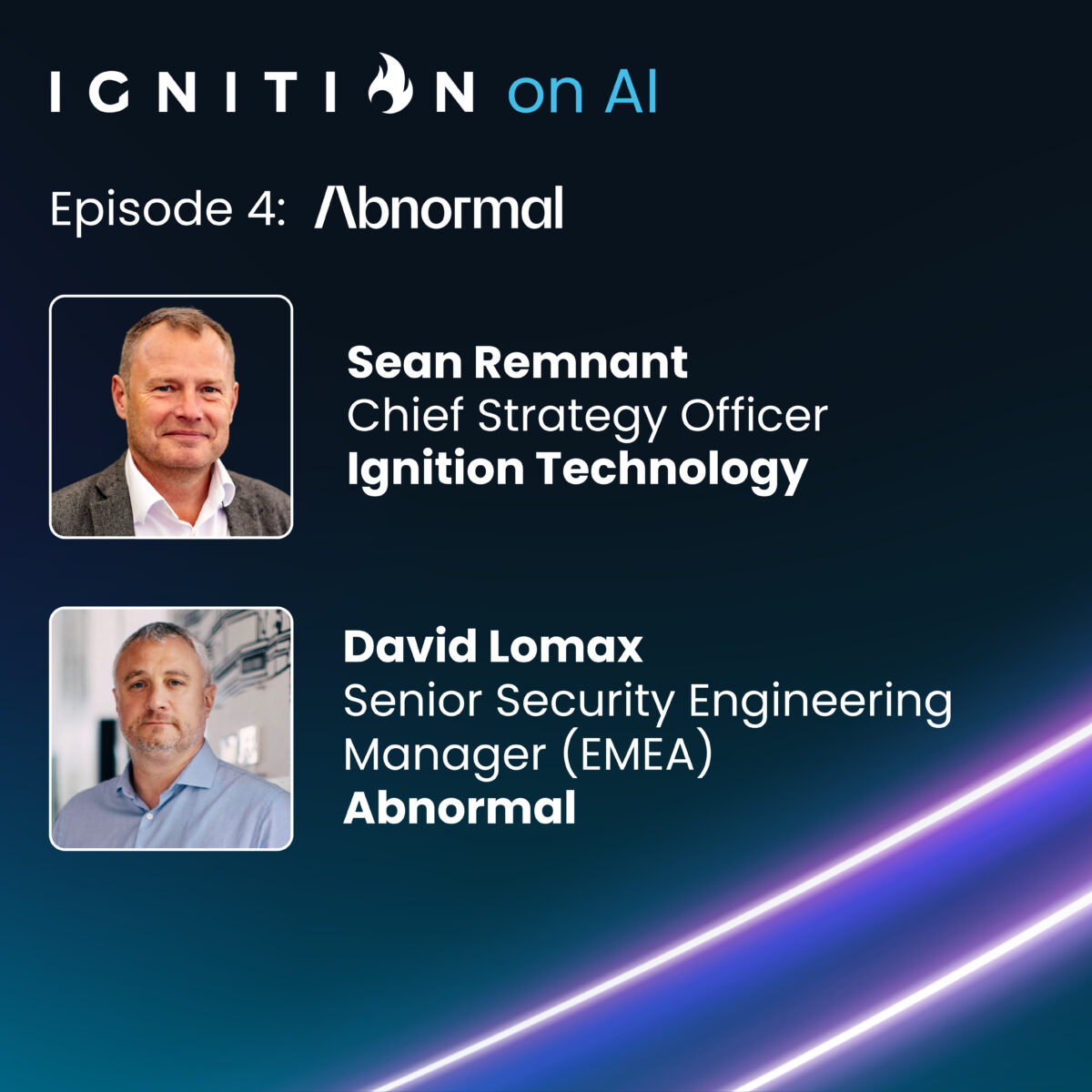
In our latest episode, Ignition Technology’s Chief Strategy Officer, Sean Remnant, is joined by David Lomax, Senior Security Engineering Manager at Abnormal, to discuss how organisations can securely manage the growing number of AI agents and non-human identities.
The rapid adoption of AI is driving the deployment of agents across organisations to improve productivity and efficiency. However, this growing unseen workforce also creates new challenges for security teams, from managing identities and access permissions to understanding behaviour and responding to threats.
Identity is becoming a much bigger problem
Attackers are continuing to exploit legitimate credentials to log in to systems, rather than just breaking through traditional defences. Once inside, they have the power to inherit existing permissions. This issue is leading CISOs to become more focused on identity to understand how to manage the rising threats.
Traditional approaches to identity management are becoming outdated as they struggle to keep pace with this changing landscape. Organisations need to monitor both human and non-human identities to identify suspicious activity before it transforms into a larger incident. During the episode, the pair discuss how organisations are using the roll of AI to improve business productivity, but governance and risk are seen as an afterthought.
Context is as important as visibility
Collecting security data isn’t enough if teams lack the context to understand what it means. David explains that traditional logging tools don’t always provide sufficient information to determine whether an unusual login or action is malicious. Security teams can spend valuable time investigating individual signals without knowing whether they represent a genuine threat.
As the number of identities and automated interactions grows, understanding normal behaviour becomes increasingly important. Organisations need to bring together information from different sources to build a clearer picture of what’s happening across their environments.
Response time matters
AI agents can streamline processes and improve efficiency, but the same speed that makes them useful can also amplify the impact of a mistake. AI agents can now move at 20,000x the speed of humans.
During the episode, David gives the example of an AI-powered booking system that suddenly starts issuing refunds to thousands of customers. Without appropriate safeguards and oversight, an automated process could create significant financial issues before a team has time to intervene.
“The mean time to respond is important over mean time to detect. Being able to detect is important, but it’s how quickly you detect that determines how quickly you can respond.”
The threat landscape extends beyond software
The episode explores an emerging concern about nation-state actors who are attempting to gain employment within organisations, using remote-working arrangements to conceal their identities and locations.
David describes suspicious recruitment patterns, including multiple interviews originating from similar IP address ranges and inconsistencies in candidates’ apparent identities. Information from recruitment platforms and video conferencing tools can help organisations identify patterns that might otherwise go unnoticed.
Discover the full episode
The growing use of AI agents is creating emerging opportunities for organisations. However, security teams must rethink how they manage identity, understand behaviour and respond to threats.
As Sean and David discuss, securing the unseen workforce requires more than collecting data or detecting unusual activity. Organisations need the context to understand what’s happening, the governance to keep AI use under control and the ability to respond quickly when something goes wrong.
Watch the latest episode of Ignition on AI to hear the full conversation with David Lomax from Abnormal.
Subscribe to the Ignition Technology YouTube channel so you don’t miss future episodes.